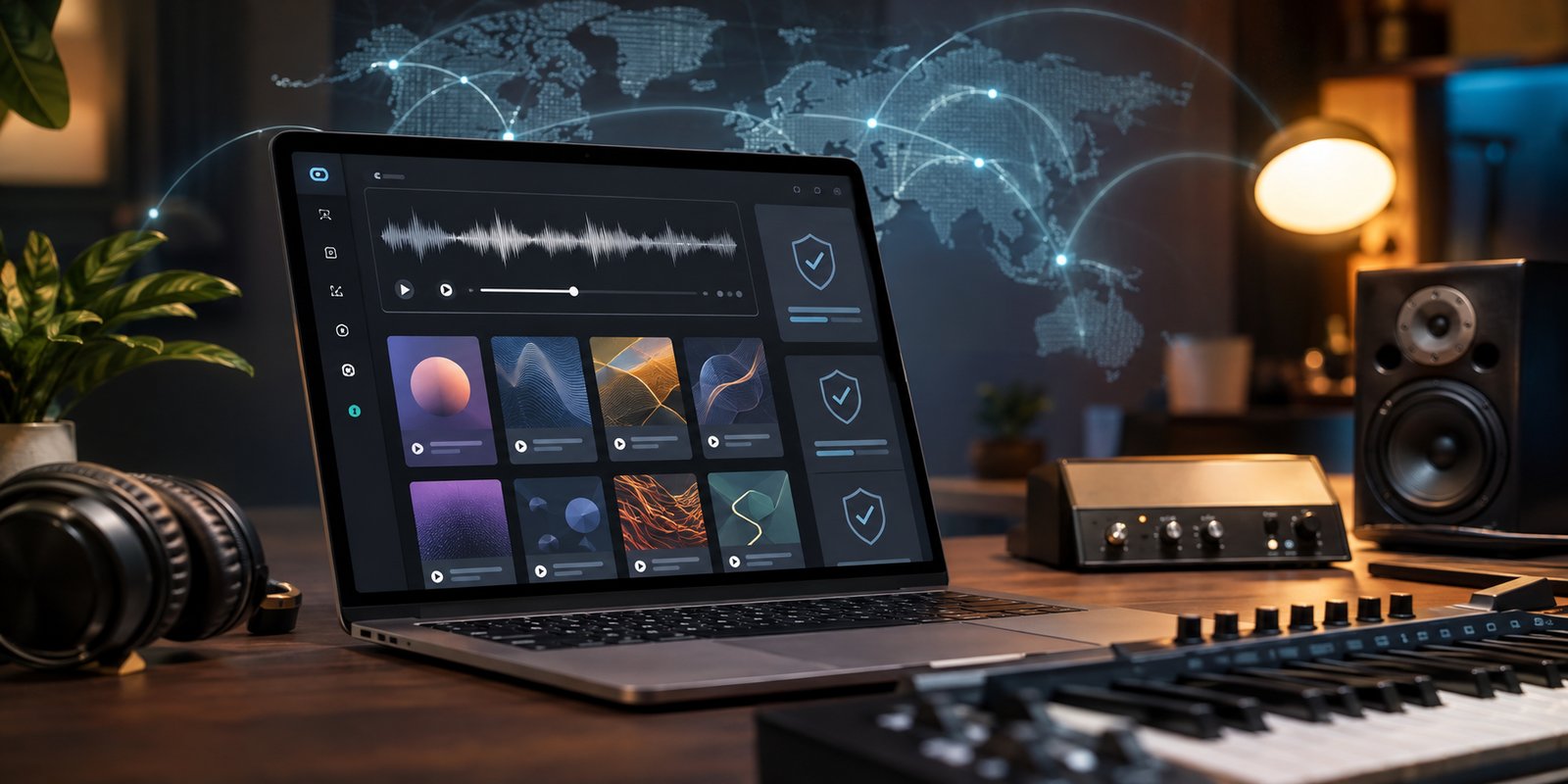
If you want to sell beats online in 2026, your store cannot rely on great instrumentals alone. A listener who lands on your page is not buying the audio in a vacuum. They are judging clarity, speed, credibility, and whether your beat page makes the next step feel easy. That is why beat store conversion depends on more than taste. It depends on page structure, demo presentation, and trust signals that reduce hesitation.
Think of your site as a decision path. A good visitor should understand what you offer, hear the beat quickly, see what they get, and feel safe enough to buy or contact you. If that path is confusing, even strong records can stall. If that path is clean, your page can sell while you sleep.
This guide focuses on practical beat page optimization for global sellers. Whether you publish on your own site or use a marketplace such as Beatprod, the same conversion principles apply: make the offer obvious, make the demo fast, and make trust visible.
1. Start with the page structure, not the decoration
The most common mistake on a sell beats website is trying to impress first and explain later. The visitor should not have to scroll through a mood board to find the beat, the price, or the license. Your page structure should answer the basic buying questions in seconds.
A high-converting beat page usually follows a predictable order:
- Headline: clear genre, vibe, and use case.
- Primary player: one obvious demo at the top.
- Purchase options: lease, exclusive, stems, custom add-ons.
- Quick benefits: what makes this beat useful for an artist.
- Trust signals: credit info, licensing clarity, delivery format.
- Related beats: keep the visitor in the catalog if the first one is not the fit.
- FAQ and support: remove doubt before checkout.
That order matters because buyers move from curiosity to evaluation to risk check. If you present pricing before the listener even hears the record, you can create friction. If you hide pricing completely, you can trigger uncertainty. The best structure balances both.
Rule of thumb: every page should help the visitor answer three questions fast: What is this? How does it sound? Why should I trust this seller?
2. Write a headline that sells the use case, not just the title
Many producers title beats as if they are naming private projects. That may be fine in a folder, but it is weak for conversion. A buyer wants context. A better headline combines genre, mood, and artistic lane. For example, instead of a vague title, use something like: Dark Trap Beat for Aggressive Rap Verses or Ambient R&B Type Beat for Late-Night Hooks.
This does not mean every title has to sound identical. It means the page should immediately tell artists where the beat lives stylistically. If you work across subgenres, your titles and labels should still guide the listener.
Useful headline formula:
- Genre + mood + artist use case
- Reference lane + energy level + song purpose
- Scene + emotion + commercial angle
Keep it natural. Do not stuff keywords awkwardly. For beat page optimization, clarity wins over cleverness.
3. Put the demo where the ear wants it
The demo is the center of the page. Everything else supports it. If the player is hidden below long text, or if the page loads with too many distractions, your conversion rate can suffer because the listener has too much work to do.
Best practice in 2026 is simple: the first playable demo should be visible above the fold on desktop and mobile. The visitor should not need to hunt for the audio. If there are multiple versions, lead with the strongest full arrangement, then add alt versions below.
What makes a strong demo section:
- Fast load time: the player should appear and work quickly.
- Clear controls: play, pause, volume, and scrub should be intuitive.
- Short intro hook: the first seconds should reveal the beat's identity.
- One primary version: do not overwhelm the first listen with five near-identical files.
- Optional version notes: clean intro, no tag version, stems available, instrumental length.
If you are hosting beats on your own site, test the player on mobile data, not just Wi-Fi. If you use a marketplace like browse beats on Beatprod, pay attention to how quickly the listing communicates value, because marketplaces often win by reducing user effort.
People rarely buy a beat after reading a long paragraph. They buy when the beat is easy to hear, easy to understand, and easy to trust.
4. Make the first 10 seconds of audio do more work
Demo strategy is not only about uploading a track. It is about presenting the right part of the track. Many producers send a beat where the first fifteen seconds are too empty, too experimental, or too similar to other records in the catalog. That can cost attention.
You want the intro to answer a question quickly: what kind of artist is this for? If the beat is energetic, let that energy appear early. If it is moody, show the atmosphere immediately. If the hook is the main asset, let the hook feel present in the demo without making it feel rushed.
Practical demo tips:
- Lead with the strongest section in the first 5 to 15 seconds.
- Use a clean edit that feels like a finished song, not a sketch.
- Limit dead air and overlong intros.
- Let the groove, bass, and main motif establish the identity early.
- Test whether the demo still sounds convincing on phone speakers.
Remember: you are not just showcasing production skill. You are helping an artist imagine a release. That imagination is where conversions begin.
5. Use trust signals that reduce buyer anxiety
Trust is one of the biggest conversion levers in any beat store. Buyers want to know that payment works, files will arrive, licenses are clear, and the seller is real. They do not need a long biography, but they do need enough proof to feel comfortable.
Useful trust signals include:
- Visible license summaries: what the buyer can and cannot do.
- Delivery expectations: instant download, stems timing, email confirmation.
- Professional profile cues: consistent branding, artist photo or logo, concise bio.
- Social proof: credits, placements, testimonials, or recognizable collaborations where accurate and permitted.
- Support contact: an easy way to ask questions before checkout.
- Payment confidence: recognizable checkout flow and secure methods.
Do not overstate anything. If you have a real placement, mention it accurately. If you do not, highlight process reliability instead. Trust is built by honesty more than hype.
For sellers who want a simpler route, a marketplace like Beatprod can help centralize product presentation, discovery, and buyer expectations. You can also publish educational content through Beatprod blog style resources to support your audience and improve discovery over time.
6. Show buyers exactly what they get
Conversion improves when the offer is concrete. A buyer should know whether they are purchasing an MP3 lease, WAV lease, stems, tracked-out files, or exclusive rights. Confusion at this stage creates drop-off.
On every beat page, present the package in a way that is easy to scan:
- Format: MP3, WAV, stems, trackouts.
- Usage: streaming, commercial release, performance, sync-ready where applicable.
- Limitations: plays, distribution caps, credit requirements.
- Upgrade path: if the buyer starts small, how they can upgrade later.
High-converting stores do not bury this information. They place it near the demo and price, where it can influence the decision without extra friction.
7. Make the checkout path boring in a good way
Good checkout feels boring. That is not a flaw; it is a sign that the buyer already has enough information. The more dramatic your checkout feels, the more likely people are to hesitate.
Reduce friction by keeping the final steps simple:
- Limit the number of clicks between demo and payment.
- Keep license names understandable.
- Use concise button labels like Buy Lease, Get Stems, or Purchase Exclusive.
- Confirm what happens after payment.
- Offer a clear support path if the buyer has issues.
If you sell globally, keep currency presentation and checkout language straightforward. For cross-border operations, payment and tax handling can involve local rules, platform policies, and professional advice, so keep that setup clean and get qualified guidance where needed.
8. Add conversion helpers beyond the individual beat page
A strong store is more than a collection of single pages. It is a system. If a visitor is not ready on one beat page, there should be an easy path to another beat, a category, or an educational page that helps them decide.
This is where internal linking matters. Send visitors to related beats, genre collections, or helpful articles that answer buyer questions. For example, a producer who wants to improve presentation may benefit from Beatprod blog resources, while a buyer who wants to browse can start with browse beats at Beatprod.
Conversion helpers that work well:
- Related beats: same lane, slightly different mood.
- Featured bundles: useful for artists building a catalog quickly.
- FAQ snippets: answer common objections before they leave.
- Email capture: useful if you have a real reason to send updates.
- Educational landing pages: help first-time buyers understand licensing or workflow.
The goal is not to trap the visitor. The goal is to keep them moving toward a confident decision.
9. Checklist: beat page optimization before launch
Before you publish or refresh a store, run this checklist:
- Does the page answer what the beat is in one line?
- Can the visitor play the demo immediately without searching?
- Does the first 10 seconds reveal the beat's identity?
- Are prices and licenses visible without confusion?
- Do buyers understand what files they receive?
- Are trust signals present and believable?
- Is mobile playback smooth and readable?
- Are related beats or categories available if the first option is not a fit?
- Is the checkout path short and simple?
- Are support and contact details easy to find?
If you can answer yes to most of those questions, your page is already ahead of many generic beat stores.
10. FAQ
What is the fastest way to improve beat store conversion?
Usually the fastest win is to simplify the page above the fold. Put the beat player, the key promise, and the main buy option where visitors can see them immediately. Then make the license information easier to scan.
Do I need a custom website to sell beats online?
Not always. A custom site gives control, but a marketplace can reduce setup work and discovery friction. A platform like Beatprod can be a practical option if you want a place to list, organize, and present beats without building everything from scratch.
How many demos should a beat page include?
Usually one strong primary demo is enough for the first decision. Additional versions can help if they serve a real purpose, such as an instrumental-only preview, a no-tag version, or a stems preview. Too many options can distract.
What trust signals matter most for first-time buyers?
Clear licenses, reliable delivery expectations, simple checkout, and visible contact or support information matter a lot. Accurate credits and honest positioning also help, but only if they are true and current.
How should I present international payment or tax details?
Keep it high-level and clear. Explain what the buyer sees at checkout and where they can get help. For legal, tax, or accounting specifics, use qualified advice in your jurisdiction rather than guessing.
Conclusion
A beat store that converts is not built on luck. It is built on structure, clarity, and trust. When the page tells visitors what the beat is, lets them hear it immediately, and removes uncertainty around the purchase, your music has a far better chance of turning attention into revenue.
Whether you build your own site or use a marketplace like Beatprod, focus on the same fundamentals: strong page structure, fast demos, and believable trust signals. If you keep improving those three layers, your beat store conversion will usually improve with them.